By Eric Jeffries, Assurified
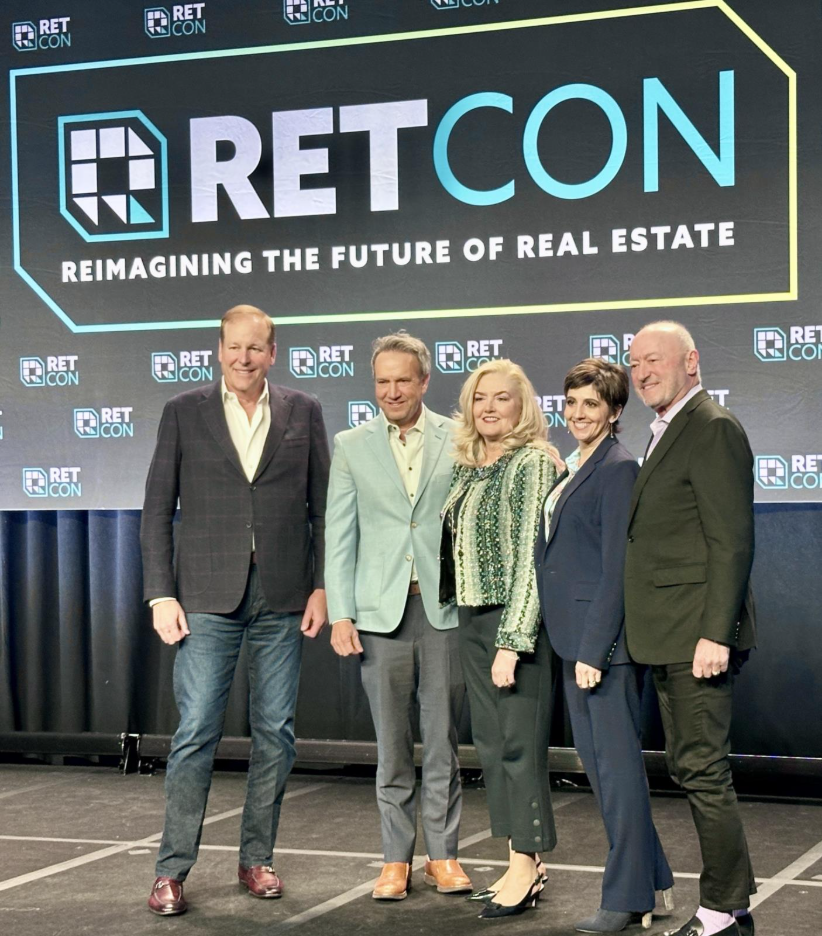
Multifamily executives know their current technology solutions work, but are they settling with good enough? What RETCON 2026 made clear is that the industry has moved on to a more demanding question: can innovative new solutions deliver significant, measurable, incremental impact on operations and NOI? And for the solutions that can, how do you evaluate, implement, and build the case internally? Those questions surfaced across panel sessions and hallway conversations in Las Vegas, where operators weren't looking for inspiration. They were looking for proof.
Marc Ehrlich, President of Rose Associates, shared what it takes to modernize a 100-year-old organization, describing transformation not as a one-time event but as a continuous process. “This isn’t change. It’s a perpetual progression.” The operators gaining traction aren’t treating technology as a rollout with a finish line. They’re building organizations that continuously adapt through training, alignment, and sustained investment. That’s where technology stops being a tool and starts becoming a strategic advantage.
Across sessions and conversations, one point was consistent: AI is not replacing teams.
It’s expanding what they can do. It’s giving teams time back to focus on service and resident experience. AI is already handling high-volume communication and repetitive workflows, allowing on-site teams to spend more time on what differentiates a property. The takeaway is clear: AI isn’t a replacement layer. It’s a capacity multiplier.
Another strong signal from RETCON is that the industry is ready for proof. Operators aren’t looking for projections or theory; they want results. What actually happens to renewal rates? Does leasing conversion improve? Do operations become more efficient? Are we reducing risk? The appetite for adoption is already there. The opportunity now is connecting technology directly to measurable outcomes and making those outcomes visible.
That urgency is being shaped by a more challenging financial environment. Compressed NOI came up repeatedly, not as a headline, but as a reality driving decision-making. When margins tighten, inefficiencies become harder to ignore. This is pushing operators to evaluate technology through a financial lens, not as a trend but as a performance lever. The conversation is shifting from what’s new to what works.
One of the most important opportunities discussed wasn’t AI itself, but visibility into risk. As Shelley Robinson, Principal of PMX Partners, noted in response to a recent Assurified LinkedIn post, “Most operators budget for fraud like it’s a rounding error… you’re looking at a ghost eating your NOI that no asset management report will ever flag.”
That’s not just a fraud problem. It’s a visibility problem.
Risk shows up across leasing, collections, operations, and legal, making it difficult to measure and manage at the portfolio level. That’s starting to change as operators look to connect those dots and treat risk as part of performance, not just exposure.
When you can see it, you can improve it.
RETCON 2026 didn’t feel like an industry catching up to technology. It felt like an industry beginning to use it more intentionally, both operationally and financially. The next phase of multifamily rental housing won’t be defined by access to tools, but by how effectively they’re used.
At Assurified, we focus on helping operators make risk visible, connecting prevention at the front door to its downstream impact on NOI. Not as a point solution, but to quantify and manage Total Cost of Risk (TCOR) and turn it into a driver of performance.
If you’re thinking about what risk is costing your portfolio, or how to make it more measurable and manageable, let’s connect on LinkedIn to continue the conversation.